Loading...
Global Warehouse Shipping
WorldwideShips from warehouses worldwide — fast, reliable delivery to your country.
DHLFedExUPSEMS+ more
At a Glance
Request pricing, availability, and compatibility details from the sales team.
Category:
Ultrasound » Probes
Brand:
Aloka
Model:
UST-9123
Description:
Abdominal, OBY/GYN, Vascular, 60 Degrees
Product Details
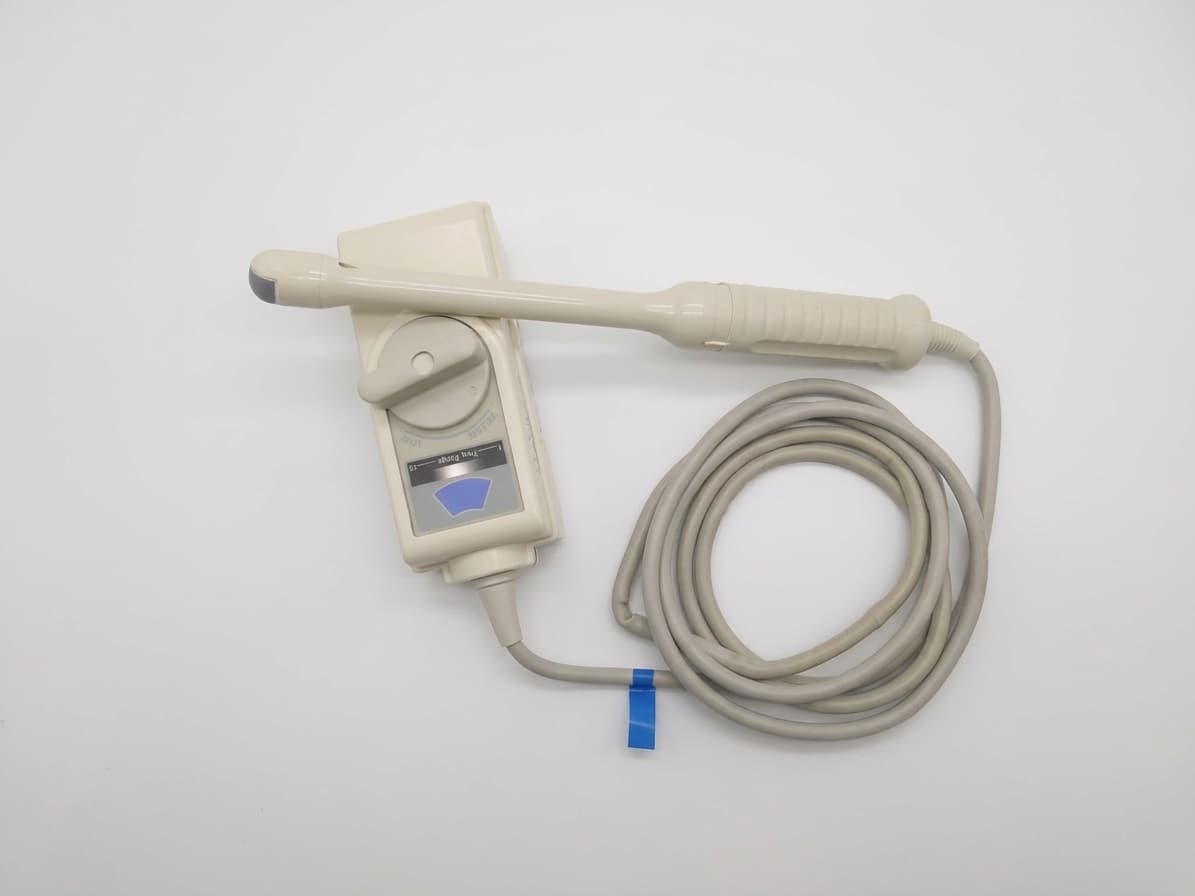
Aloka UST-9123 Convex Ultrasound Probe
Product Recommendations
Explore related ultrasound probes and parts from our catalog.


Product Description
Aloka UST-9123 Convex Ultrasound Probe
Our catalog entry for the Aloka abdominal, oby/gyn, vascular, 60 degrees documents the verified fields for this Aloka ultrasound probe — model reference, frequency, and compatible system — to support clinical-engineering workflows.
Listing Highlights
- Manufacturer-defined function: abdominal, oby/gyn, vascular, 60 degrees (for Aloka ultrasound platforms).
- Compatible with Aloka Alpha 6, F31, F37, SSD-3500, SSD-4000.
- Catalog part reference: UST-9123.
- Operating frequency band (per catalog record): 1.0/6.0 Mhz.
- Belongs to the Aloka transducer family.
Technical Details
| Brand | Aloka |
|---|---|
| Product Type | Probes |
| Category | Ultrasound » Probes |
| Model | UST-9123 |
| Description | Abdominal, OBY/GYN, Vascular, 60 Degrees |
| Type | Convex |
| Frequency | 1.0/6.0 Mhz |
| Ultrasound Machine | Alpha 6, F31, F37, SSD-3500, SSD-4000 |
| Compatible Ultrasound System(s) | Alpha 6, F31, F37, SSD-3500, SSD-4000 |
Compatible Platforms
This product is listed for use with the following Aloka ultrasound systems: Alpha 6, F31, F37, SSD-3500, SSD-4000. Verify your specific system model and revision against the part reference before ordering to confirm fit.
About This Category
Ultrasound probes (transducers) are the imaging interface of any ultrasound system: they convert electrical pulses into acoustic waves and convert returning echoes back into electrical signals for image reconstruction. Probe selection — including array type (linear, convex, phased array, endocavitary), frequency range, and footprint — is matched to the clinical application (general imaging, vascular, cardiac, OB/GYN, point-of-care, etc.). Compatible probes for a given console are listed by the original manufacturer; replacing or adding a probe typically requires verifying connector type, supported frequency, and software compatibility with the host system.
What's Included
- Aloka UST-9123 Convex Ultrasound Probe
- Identification label
Notes
- Verify the part number and model fitment against your unit's documentation prior to purchase.
- Product images and descriptions are for reference; the appearance of the actual item may vary by production batch or revision.
- If you are unsure about compatibility, contact our support team with your system model and serial number.
- Confirm connector type, frequency range, and intended clinical application before ordering.
- Mechanical damage to the lens, cable strain relief, or connector pins is the most common cause of probe replacement in the field.
SKU/Link Reference: AlokaUST-9123
Application Scenarios
Hospitals
Suitable for professional medical equipment needs in various hospitals
Clinics
Meeting professional medical equipment needs in clinics
Research Institutions
Supporting professional needs in medical research institutions

